
当你在医院看到输液架稳稳立起,当家中自来水源源不断供应,当城市天际线被脚手架悄然勾勒轮廓,当石油跨越千里奔流而来——这些看似平常的场景背后,都离不开一种强大而沉默的材料:钢铁管材。
它们如现代社会的“钢铁骨架”,在看不见的地方支撑着我们的日常生活与宏大工程。
When you see infusion racks standing steadily in the hospital, a continuous supply of tap water in your home, the city skyline quietly outlined by scaffolding, and oil rushing across thousands of miles - behind these seemingly ordinary scenes, there is a powerful and silent material: steel pipes.
They are like the "steel skeleton" of modern society, supporting our daily lives and grand projects in unseen places.
一、钢铁管材家族:无缝与焊接的“双生之花”
钢铁管材世界主要由两大分支构成:
无缝钢管:浑然一体的“力量担当”
诞生方式: 由实心钢坯高温加热后,经穿孔、轧制或拉伸等工艺加工成型,管身浑然一体。
核心优势: 强度高、承压能力卓越、壁厚均匀。无焊缝,避免了潜在的薄弱环节。
典型舞台: 高压锅炉、高温换热器、石油天然气钻采与输送、高压液压系统、重要机械结构件(如轴承套)等对安全性和承压要求极高的领域。
焊接钢管:高效灵活的“多面手”
诞生方式: 将钢板或钢带(卷板)通过成型设备弯曲成管状,然后利用不同焊接技术(如高频电阻焊 ERW、埋弧焊 SAW、激光焊等)将接缝焊接牢固。
核心优势: 生产效率高、成本相对较低、规格尺寸灵活多样(尤其在大口径方面)。
典型舞台:
低压流体输送: 水、煤气、暖气、空气等城市管网、建筑内部管道。
结构支撑: 建筑脚手架、厂房钢结构、桥梁、塔桅结构。
机械制造: 农用机械、汽车零部件、家具框架等。
桩基工程: 打桩用钢管
1、 The family of steel pipes: the twin flower of seamless and welded pipes
The world of steel pipes is mainly composed of two branches:
Seamless steel pipe: a seamless "power bearing"
Birth method: After high-temperature heating of solid steel billets, they are processed and formed through processes such as perforation, rolling, or stretching, resulting in a seamless tube body.
Core advantages: high strength, excellent pressure bearing capacity, and uniform wall thickness. No welds, avoiding potential weak links.
Typical stages: high-pressure boilers, high-temperature heat exchangers, oil and gas drilling and transportation, high-pressure hydraulic systems, important mechanical structural components (such as bearing sleeves), and other fields that require extremely high safety and pressure.
Welded steel pipes: efficient and flexible "versatile"
Birth method: Steel plates or steel strips (coils) are bent into tubes through forming equipment, and then different welding techniques (such as high-frequency resistance welding (ERW), submerged arc welding (SAW), laser welding, etc.) are used to weld the joints firmly.
Core advantages: high production efficiency, relatively low cost, flexible and diverse specifications and sizes (especially in large caliber).
Typical Stage:
Low pressure fluid transportation: urban pipelines such as water, gas, heating, air, and internal building pipelines.
Structural support: building scaffolding, factory steel structures, bridges, tower and mast structures.
Mechanical manufacturing: agricultural machinery, automotive parts, furniture frames, etc.
Pile foundation engineering: steel pipes for pile driving.
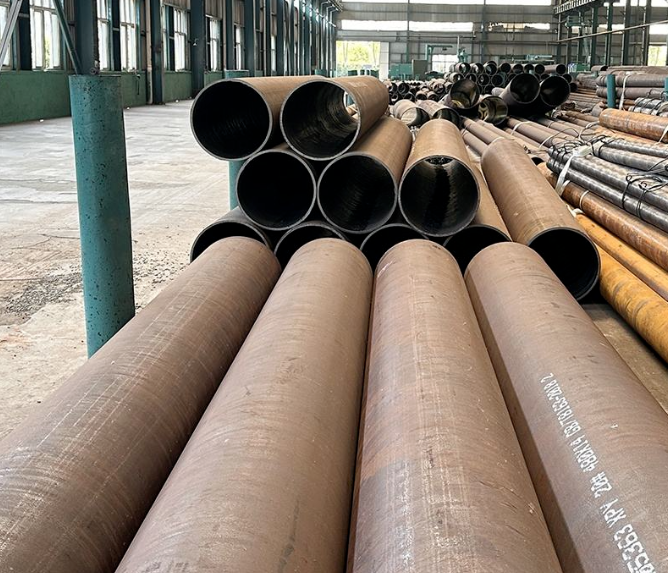
二、钢铁管材的核心力量:为何选择钢铁?
坚不可摧的强度与韧性: 钢铁赋予管材卓越的抗拉、抗压和抗冲击能力,能承受巨大载荷和复杂应力。
百变之身: 通过调整合金成分、热处理工艺和制造方法,可生产出满足不同强度、硬度、耐腐蚀性、耐高低温等特殊要求的管材。
塑造无限: 可轻松进行切割、弯曲、焊接、螺纹加工等,适应各种复杂安装需求。
持久耐用: 在合理选材、设计和防护(如涂层、镀锌)下,钢铁管材使用寿命极长。
循环之力: 钢铁具有极高的可回收性,符合可持续发展理念。
2、 The core strength of steel pipes: why choose steel?
Unbreakable strength and toughness: Steel endows pipes with excellent tensile, compressive, and impact resistance, capable of withstanding enormous loads and complex stresses.
Versatile body: By adjusting the alloy composition, heat treatment process, and manufacturing methods, pipes that meet special requirements such as strength, hardness, corrosion resistance, and high and low temperature resistance can be produced.
Shaping Unlimited: It can easily be cut, bent, welded, threaded, etc., adapting to various complex installation needs.
Durable and long-lasting: With reasonable material selection, design, and protection (such as coating and galvanizing), steel pipes have an extremely long service life.
The Power of Circulation: Steel has extremely high recyclability, which is in line with the concept of sustainable development.
三、钢铁管材的广阔天地钢铁管材的身影,已融入现代社会的每个角落:
能源命脉: 石油、天然气勘探、开采、长距离输送管道(尤其是主干线高压管道多采用无缝或大口径埋弧焊管);电厂锅炉管、热交换器管;核电设施。
城市血脉: 自来水、污水、雨水、燃气、热力等市政地下管网(大量使用焊接钢管)。
建筑筋骨: 建筑结构用管(方矩管、圆管等)、脚手架管(焊管为主)、打桩管。
工业基石: 化工厂、炼油厂、制药厂等各类工业设备管道;机械设备的液压支柱、传动轴、输送辊筒等。
交通脉络: 汽车传动轴、排气系统、底盘结构件;船舶管道系统;部分桥梁构件。
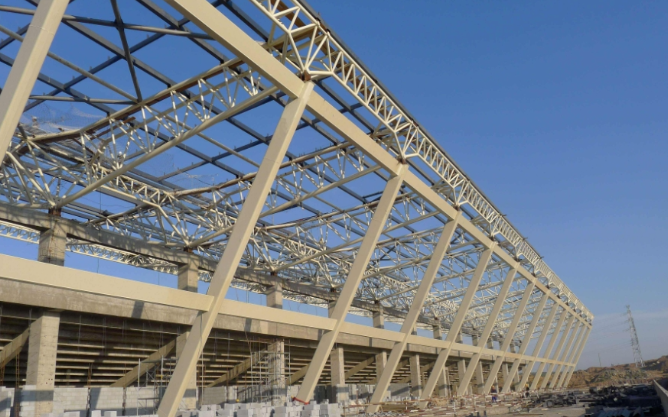
基础支撑: 通信塔、电力塔、风力发电塔筒(大型焊管)、大型体育场馆顶棚网架结构。
3、 The vast world of steel pipes
The figure of steel pipes has integrated into every corner of modern society:
Energy lifeline: oil and gas exploration, extraction, long-distance transmission pipelines (especially for high-pressure pipelines on main lines, which often use seamless or large-diameter submerged arc welded pipes); Boiler tubes and heat exchanger tubes in power plants; Nuclear power facilities.
Urban bloodline: municipal underground pipelines such as tap water, sewage, rainwater, gas, and heat (using a large amount of welded steel pipes).
Building bones: pipes for building structures (square and rectangular pipes, round pipes, etc.), scaffolding pipes (mainly welded pipes), and pile driving pipes.
Industrial cornerstone: various industrial equipment pipelines such as chemical plants, refineries, and pharmaceutical factories; Hydraulic supports, transmission shafts, conveyor rollers, etc. of mechanical equipment.
Traffic context: automobile transmission shaft, exhaust system, chassis structural components; Ship pipeline system; Partial bridge components.
Basic support: communication tower, power tower, wind power tower (large welded pipe), large sports stadium ceiling grid structure.
四、选择与识别:读懂钢铁管材的“身份证”
面对种类繁多的钢铁管材,如何精准选择?
明确使命: 输送流体?承受压力?结构支撑?耐腐蚀?耐高温?明确核心要求是第一要务。
规格参数:
外径 (OD) 和 壁厚 (WT): 决定承载能力和流量。
长度: 常规定尺(如6米、12米)或不定尺。
材质标准: 常见如碳素钢(Q235)、优质碳素结构钢(20#、45#)、合金钢(如16Mn)、不锈钢(304、316)等,对应不同的力学性能和耐腐蚀性。需查看材质证明书。
制造标准: 如GB/T(中国国标)、ASTM/ASME(美标)、API(石油协会标准)、EN(欧标)等。标准规定了材料、尺寸、公差、试验方法等要求。
表面处理: 黑管(无涂层)、镀锌管(防锈)、涂塑管(防腐防垢)、喷漆等,根据环境和使用要求选择。
质量证明: 务必索取并核实供应商提供的质量证明书(材质单),确保符合选型要求。
警惕陷阱: 市场上存在以次充好、壁厚不足、材质不符等劣质产品。选择信誉良好的供应商,必要时可要求第三方检测。
4、 Selection and Identification: Understanding the "ID Card" of Steel Pipe Materials
How to choose accurately when faced with a wide variety of steel pipes?
Clear mission: Transporting fluids? Enduring pressure? Structural support? Corrosion resistance? High temperature resistance? Clarifying core requirements is the top priority.
Specification parameters:
Outer diameter (OD) and wall thickness (WT): determine load-bearing capacity and flow rate.
Length: Regular fixed length (such as 6 meters, 12 meters) or indefinite length.
Material standards: Common materials include carbon steel (Q235), high-quality carbon structural steel (20 #, 45 #), alloy steel (such as 16Mn), stainless steel (304, 316), etc., corresponding to different mechanical properties and corrosion resistance. Need to check the material certificate.
Manufacturing standards: such as GB/T (Chinese National Standard), ASTM/ASME (American Standard), API (Petroleum Institute Standard), EN (European Standard), etc. The standard specifies requirements for materials, dimensions, tolerances, testing methods, etc.
Surface treatment: black pipe (uncoated), galvanized pipe (rust proof), plastic coated pipe (anti-corrosion and anti scaling), spray painting, etc., selected according to environmental and usage requirements.
Quality certificate: It is necessary to request and verify the quality certificate (material list) provided by the supplier to ensure compliance with the selection requirements.
Beware of traps: There are inferior products in the market such as passing off inferior goods as good, insufficient wall thickness, and inconsistent materials. Choose a reputable supplier and request third-party testing if necessary.
本文采摘于网络,不代表本站立场,转载联系作者并注明出处:https://mjgaz.cn/fenxiang/276910.html

